
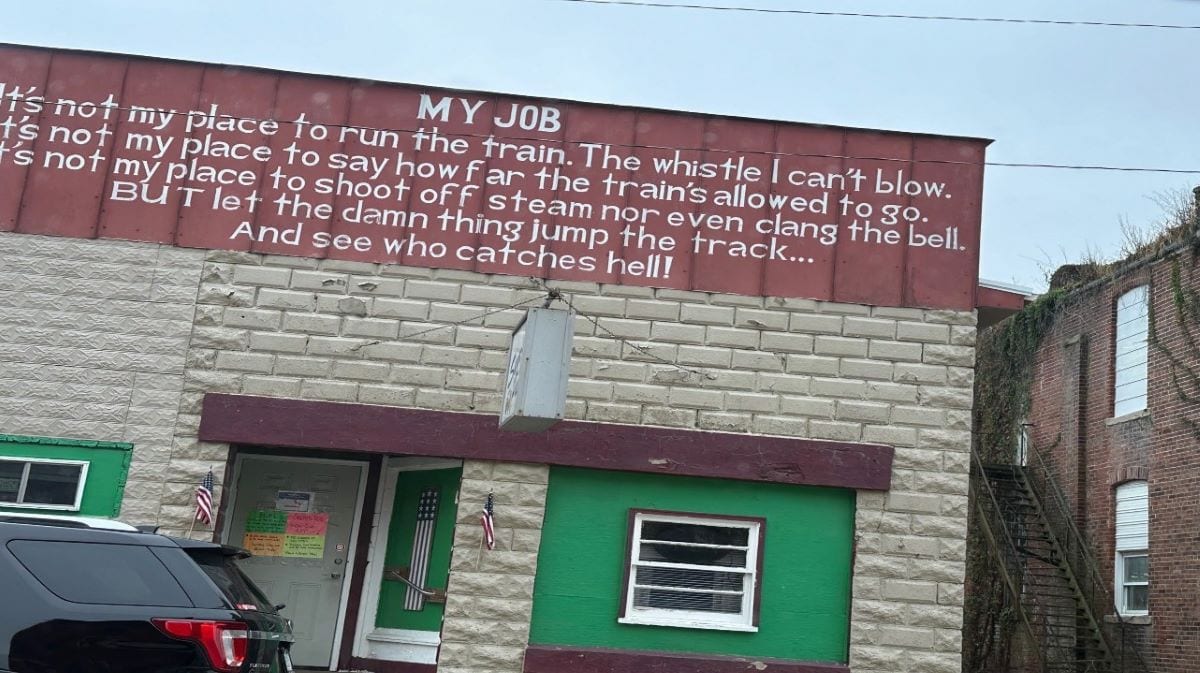
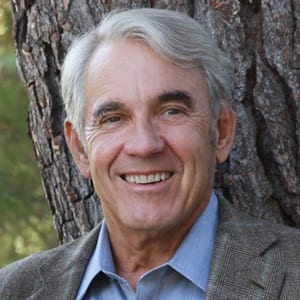
In late September my wife Becky and I were able to visit my hometown of Cayuga, Indiana, on our way back from a trip to the East Coast. It was my first time back in many years.
Cayuga is just west of the Wabash River and near the Indiana/Illinois line, mid-way between Chicago, IL and Evansville, IN. It had around 800 people when I was born there in 1938. There are not many more today, less than a thousand residents.
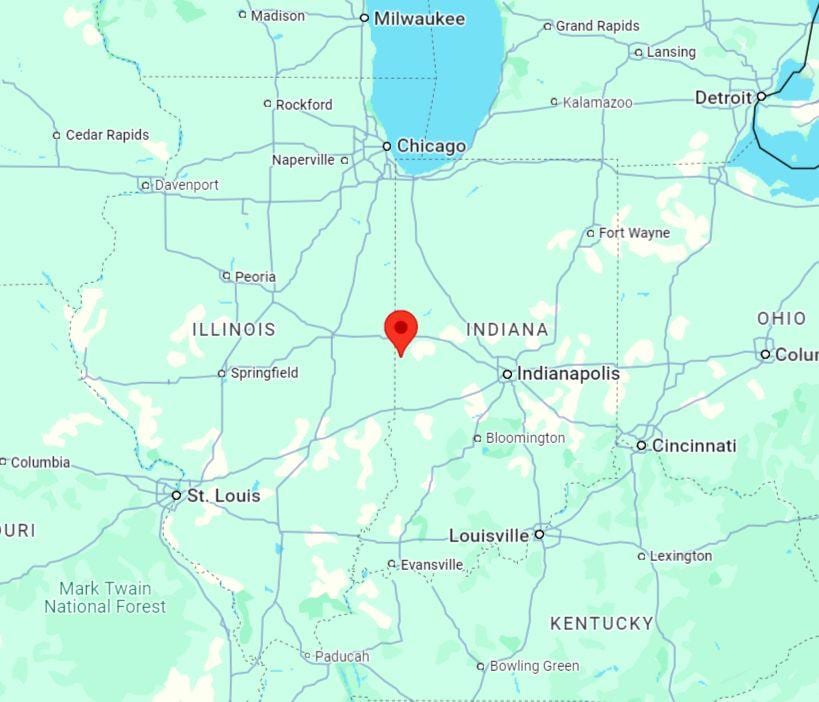 Map of Indiana and Illinois showing the location of the town of CayugaMy grandfather and grandmother Morgan came to Cayuga from Perrysville, an early river town, after they were married. In 1911 my grandfather and two others bought a vegetable canning company in Cayuga, which became Morgan and Sons Canning Co.
When I started working in the plant as a boy we canned sweet corn and green beans. Our lives revolved around the cannery operations, which in turn revolved around the seasons of agriculture: spring planting, summer growth and harvest, summer and fall canning, and the winter period of rest, repair, and preparation before it all began again.
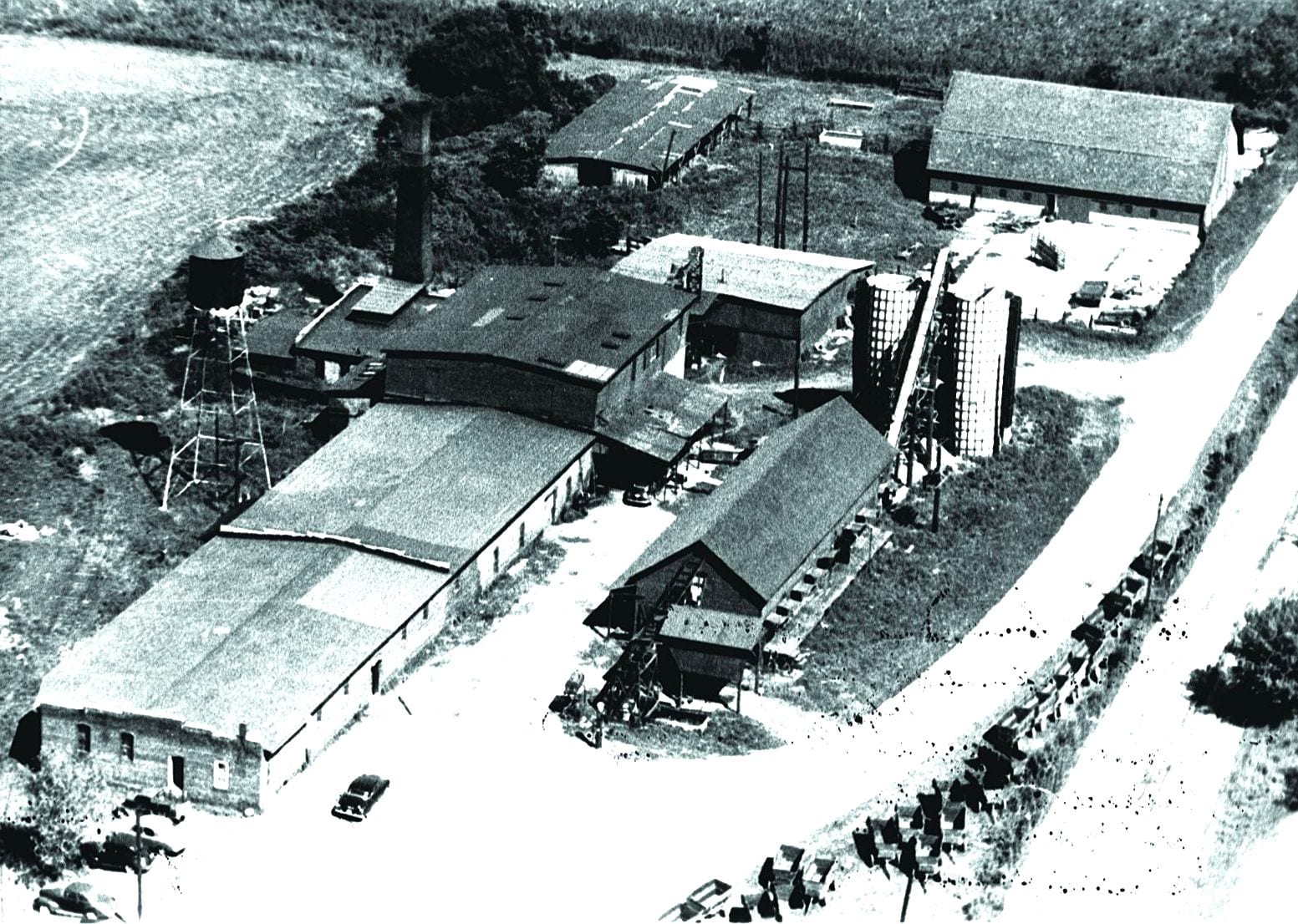 Morgan & Sons Cannery in the1940sThe cannery was closed in 1966 as the industry consolidated.
On our visit we toured three towns which were still active during the 50s, 60s, and 70s. Perrysville, with about 450 residents, is even smaller than Cayuga. Danville (pop. 10,000) was the regional hub for our area, about 60 miles away.
Of the cannery, only a grass field and the concrete floor of the cinder block warehouse remain. The dirt road back to my house has been closed off with a fence. All of the people I knew in the area have passed away or moved.
The agricultural fields in the region are still vital, but the town where my grandparents and boyhood friends lived is now just depressing. Cayuga’s original reason for being was that it was at the crossing of the north and south and the east and west railway lines. The North/South railroad is still there but the East/West railroad is gone. The grain mill is still there, but little used. Many buildings are empty. Other industries, like the Acme Brick Company, are closed.
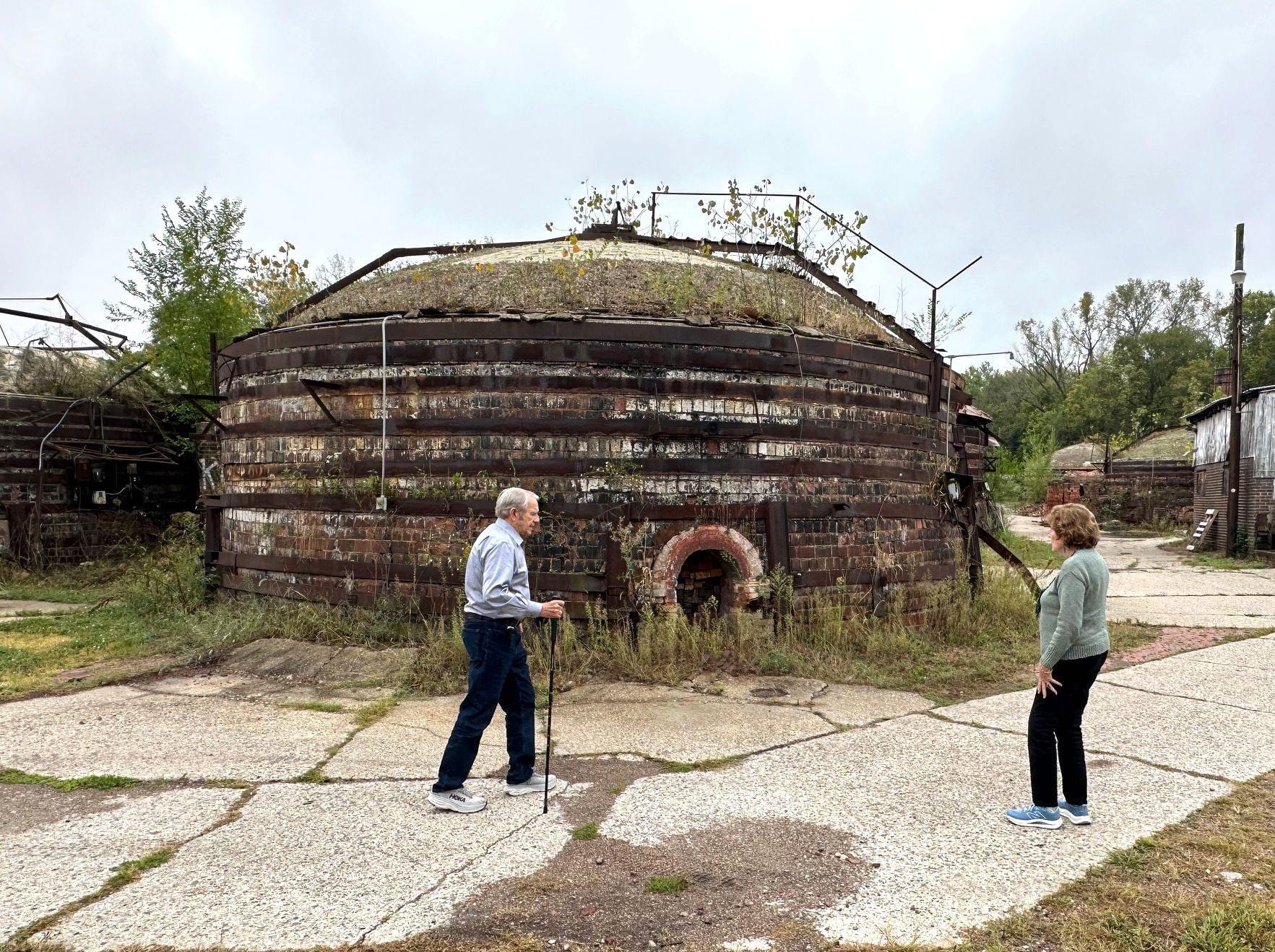 Jim & Becky Morgan in front of an abandoned brick kilnPerrysville was similar. Some of the houses I knew were still there. We could not find my Uncle Doc’s home, nor his office next door. He was a rural icon who put himself through medical school as a “gandy dancer,” a railroad worker, working until he could afford a year of school.
The most depressing part of the visit was the seeming lack of hope. Many homes were empty, or unkept. There was a real lack of pride there where in growing up even the poorest people took care of any property they owned or rented.
Unless you have traveled to towns like this it’s hard to fully appreciate the depth of the political conflict in the US. When you consider the vast economic disparity between this part of Indiana, and states like California, which is now my home, it’s no wonder that many of these people feel that the political system has let them down.
It again makes me grateful for the hard work that nonprofits undertake to help people in need, across the economic spectrum.
- How does my recent experience resonate with the things you’re seeing around you?