

Two weeks ago I considered one of the long-standing myths of leadership, that “leaders are born, not made.” As I wrote, I believe that for most people it’s well within our grasp to learn how to lead and manage more effectively. But let’s look more closely at the differences between leadership and management.
While leadership and management are closely related, they are not the same, nor are they interchangeable. As Peter Drucker, the leader of modern management theory, once proclaimed, “Management is doing things right; leadership is doing the right things.” Effectively running an organization demands both leadership and management skills.
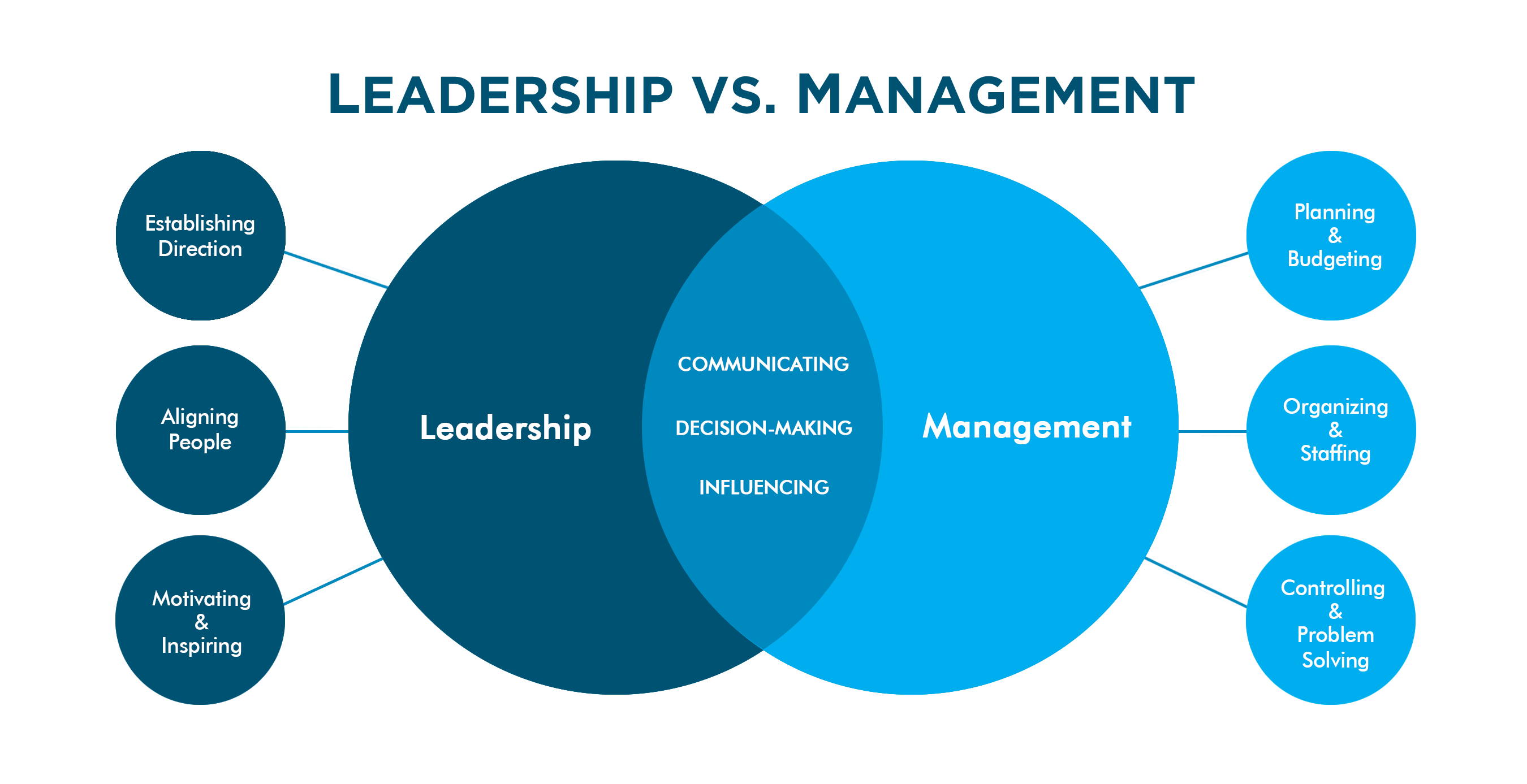
As the illustration shows, the leadership role includes setting the vision, and motivating and inspiring everyone working within the organization. A leader establishes opportunity by pointing the ship in the right direction and bringing on board the necessary personnel and resources.
New nonprofits (and many successful startups) tend to be run by charismatic leaders who are good at raising money and positioning and evangelizing the value of the organization’s product or service.
Leadership, however, while essential, is not sufficient for success.
Every person running an organization, a program, or a team, must accept responsibility also for managing less-glamorous duties, such as the implementation of strategy through planning, budgeting, organizing, staffing, problem-solving and follow-up.
And then there are shared responsibilities: both leaders and managers need to be effective communicators, decision-makers, and influencers.
An organization succeeds when leadership and management are strong and when they are balanced.
- Does your organization have strong leadership balanced with strong management?
- What could strengthen each role?